The-3-proposal-rule
Learn how to use the 3-proposal rule to maximize the value of a negotiation
Do you know the rule of 3 simultaneous proposals?
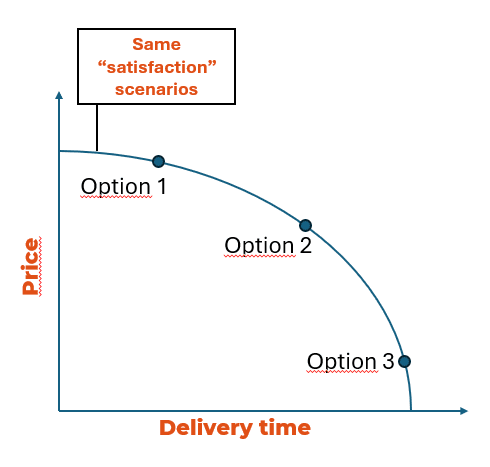
There is a very interesting theory (Pareto Efficiency) that says there are different scenarios that leave you equally "satisfied" with a negotiation.
Take the example in the image below. If you are going to receive a product quickly, you would potentially be willing to pay more for it. If it takes longer, you ask for a discount.
Okay, but how does this help you?
Simple, you should send 3 proposals to a supplier. In each one, you vary the price and the delivery time — as long as the result of that negotiation satisfies you similarly.
Example:
- Scenario 1: price of 55, delivery in 5 days
- Scenario 2: price of 53, delivery in 7 days
- Scenario 3: price of 50, delivery in 10 days
And why would this work?
Because the supplier values these things differently than you do. For them, it might not be possible to deliver within 7 days. However, they are open to discussing the price.
With this, a negotiation that wouldn't close now becomes possible, with the same level of satisfaction for you.
Companies have been using this concept a lot, especially regarding payment terms, where the supplier has much higher capital costs.
If you liked this, look up the company Pactum. They are an example of who is applying this concept in practice.